al-Shafi'i (d. 204) · al-Umm · Vol. 7, p. 163 · Ijtihad
Fathers may give minors in marriage: Aisha's marriage at six or seven as the proof
Arabic text
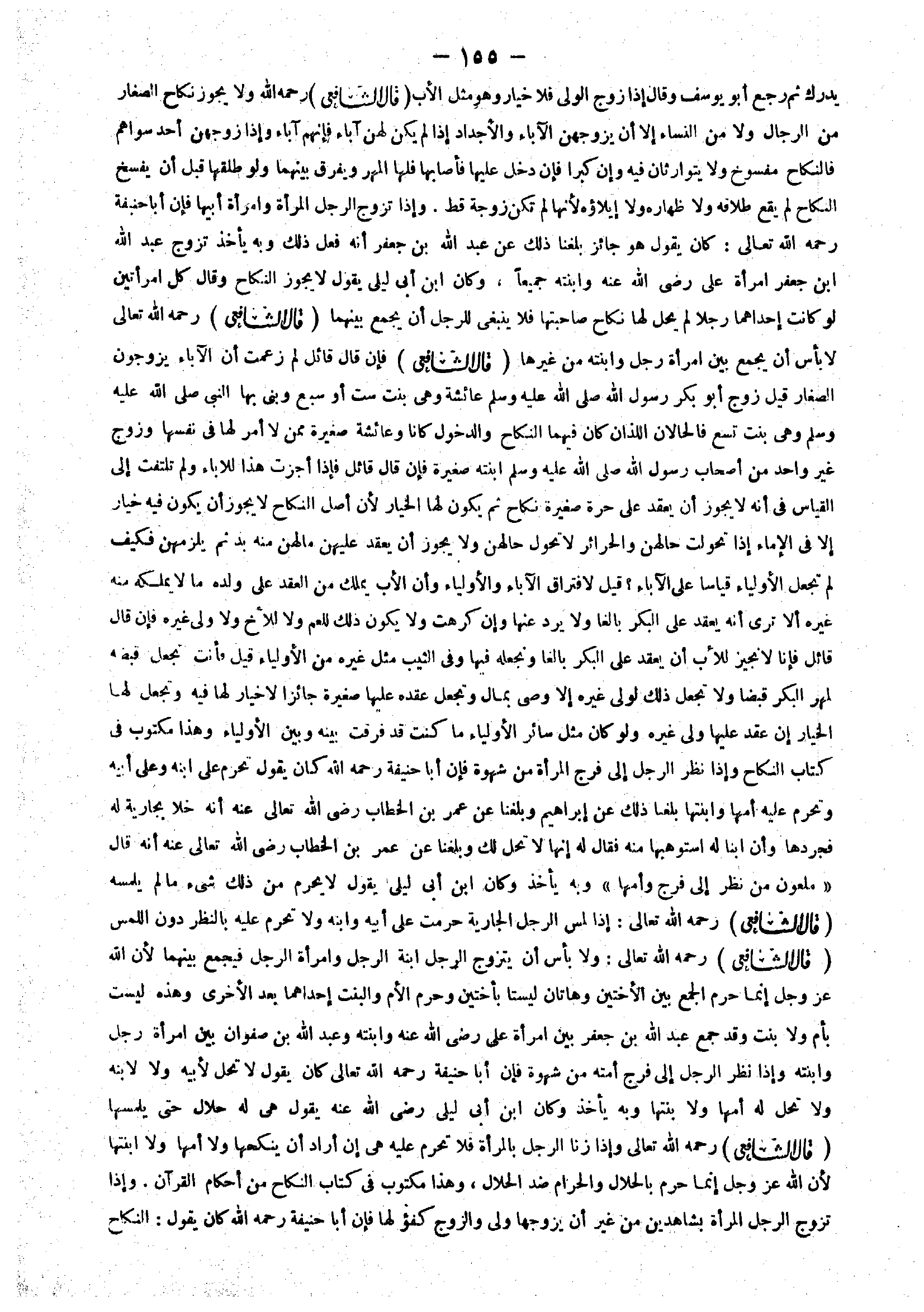
(قال الشافعي): فإن قال قائل: لم زعمت أن الآباء يزوجون الصغار قيل: «زوج أبو بكر رسول الله ﷺ عائشة وهي بنت ست أو سبع وبنى بها النبي ﷺ وهي بنت تسع» فالحالان اللذان كان فيهما النكاح والدخول كانا وعائشة صغيرة ممن لا أمر لها في نفسها وزوج غير واحد من أصحاب رسول الله ﷺ ابنته صغيرة
Full page
الشافعي - رحمه الله تعالى -): وتضرب الرجال في الحدود قياما وفي التعزير وتترك لهم أيديهم يتقون بها ولا تربط ولا يمدون وتضرب النساء جلوسا: وتضم عليهن ثيابهن ويربطن لئلا ينكشفن ويلين رباط ثيابهن أو تليه منهن امرأة. ، وإذا قذف الرجل رجلا ميتا فإن أبا حنيفة - رحمه الله تعالى - كان يقول: لا يأخذ بحد الميت إلا الولد أو الوالد وبهذا يأخذ وكان ابن أبي ليلى - رحمه الله تعالى - يقول: يأخذ أيضا الأخ والأخت وأما غير هؤلاء فلا (قال الشافعي - رحمه الله تعالى -): يأخذ حد الميت ولده وعصبته من كانوا. وإذا قذف الرجل امرأته وشهد عليه الشهود بذلك وهو يجحد فإن أبا حنيفة - رحمه الله تعالى - كان يقول: إذا رفع إلى الإمام خبره حبسه حتى يلاعن وبهذا يأخذ وكان ابن أبي ليلى يقول: إذا جحد ضربته الحد ولا أجبره على اللعان منها إذا جحد (قال الشافعي - رحمه الله تعالى -): وإذا شهد الشاهدان على رجل أنه قذف امرأته مسلمة وطلبت أن يحد لها وجحد شهادتهما قيل له: إن لاعنت خرجت من الحد وإن لم تلاعن حددناك. باب النكاح (قال الشافعي - رحمه الله تعالى -): وإذا تزوج المرأة بغير مهر مسمى فدخل بها فإن لها مهر مثلها من نسائها لا وكس ولا شطط وقال أبو حنيفة - رحمه الله تعالى -: نساؤها أخواتها وبنات عمها وبه يأخذ وكان ابن أبي ليلى يقول: نساؤها أمها وخالاتها (قال الشافعي): وإذا تزوج الرجل المرأة بغير مهر فدخل بها فلها صداق مثلها من نسائها ونساؤها نساء عصبتها الأخوات وبنات العم وليس الأم ولا الخالات إذا لم يكن بنات عصبتها من الرجال ونساؤها اللاتي يعتبر عليها بهن من كان مثلها من أهل بلدها وفي سنها وجمالها ومالها وأدبها وصراحتها لأن المهر يختلف باختلاف هذه الحالات. . وإذا زوج الرجل ابنته وهي صغيرة ابن أخيه وهو صغير يتيم في حجره فإن أبا حنيفة - رحمه الله تعالى - كان يقول: النكاح جائز وله الخيار إذا أدرك وبه يأخذ وكان ابن أبي ليلى يقول: لا يجوز ذلك عليه حتى يدرك ثم رجع أبو يوسف وقال إذا زوج الولي فلا خيار وهو مثل الأب (قال الشافعي): ﵀ ولا يجوز نكاح الصغار من الرجال ولا من النساء إلا أن يزوجهن الآباء والأجداد إذا لم يكن لهن آباء وإذا زوجهن أحد سواهم فالنكاح مفسوخ ولا يتوارثان فيه وإن كبرا فإن دخل عليها فأصابها فلها المهر ويفرق بينهما ولو طلقها قبل أن يفسخ النكاح لم يقع طلاقه ولا ظهاره ولا إيلاؤه لأنها لم تكن زوجة قط. وإذا تزوج الرجل المرأة وامرأة أبيها فإن أبا حنيفة - رحمه الله تعالى - كان يقول: هو جائز بلغنا ذلك عن عبد الله بن جعفر أنه فعل ذلك وبه يأخذ تزوج عبد الله بن جعفر امرأة علي ﵁ وابنته جميعا، وكان ابن أبي ليلى يقول: لا يجوز النكاح وقال: كل امرأتين لو كانت إحداهما رجلا لم يحل لها نكاح صاحبتها فلا ينبغي للرجل أن يجمع بينهما (قال الشافعي - رحمه الله تعالى -): لا بأس أن يجمع بين امرأة رجل وابنته من غيرها (قال الشافعي): فإن قال قائل: لم زعمت أن الآباء يزوجون الصغار قيل: «زوج أبو بكر رسول الله ﷺ عائشة وهي بنت ست أو سبع وبنى بها النبي ﷺ وهي بنت تسع» فالحالان اللذان كان فيهما النكاح والدخول كانا وعائشة صغيرة ممن لا أمر لها في نفسها وزوج غير واحد من أصحاب رسول الله ﷺ ابنته صغيرة فإن قال قائل فإذا: أجزت هذا للآباء ولم تلتفت إلى القياس في أنه لا يجوز أن يعقد على حرة صغيرة نكاح ثم يكون لها الخيار لأن أصل النكاح لا يجوز أن يكون فيه خيار إلا في الإماء إذا تحولت حالهن والحرائر لا تحول حالهن ولا يجوز أن يعقد
Translation
Al-Shafi'i said: If someone says, 'On what basis did you claim that fathers may give minors in marriage?', the answer is: 'Abu Bakr gave Aisha in marriage to the Messenger of God when she was a girl of six or seven, and the Prophet consummated the marriage with her when she was a girl of nine.' In both states, that of the contract and that of consummation, Aisha was a minor with no say over herself. More than one of the Companions of the Messenger of God also gave his daughter in marriage while she was a minor.
Word by word
Each Arabic word's literal counterpart; a hyphen marks an attached suffix/particle boundary. The fluent translation is above.
said (قَالَ al-Shafi'i: الشَّافِعِيُّ): if فَإِنْ says قَالَ someone: قَائِلٌ: on what basis لِمَ did you claim زَعَمْت that أَنَّ fathers الْآبَاءَ may marry off يُزَوِّجُونَ minors الصِّغَارَ the answer is: قِيلَ: gave in marriage «زَوَّجَ Abu أَبُو Bakr بَكْرٍ the Messenger of رَسُولَ God اللَّهِ (peace be upon him) ﷺ Aisha عَائِشَةَ while she was وَهِيَ a girl of بِنْتُ six سِتٍّ or أَوْ seven سَبْعٍ and-consummated the marriage وَبَنَى with her بِهَا the Prophet النَّبِيُّ (peace be upon him) ﷺ while she was وَهِيَ a girl of بِنْتُ nine. تِسْعٍ» so the two states فَالْحَالَانِ in which اللَّذَانِ occurred كَانَ in them فِيهِمَا the marriage contract النِّكَاحُ and-the consummation وَالدُّخُولُ both occurred كَانَا while Aisha was وَعَائِشَةُ a minor صَغِيرَةٌ among those who مِمَّنْ have no لَا say أَمْرَ over herself لَهَا in فِي herself نَفْسِهَا and-married off وَزَوَّجَ more than غَيْرُ one وَاحِدٍ of مِنْ the Companions of أَصْحَابِ the Messenger of رَسُولِ God اللَّهِ (peace be upon him) ﷺ his daughter ابْنَتَهُ while she was a minor صَغِيرَةً
Interlinear view
(قَالَsaidالشَّافِعِيُّ):al-Shafi'i:فَإِنْifقَالَsaysقَائِلٌ:someone:لِمَon what basisزَعَمْتdid you claimأَنَّthatالْآبَاءَfathersيُزَوِّجُونَmay marry offالصِّغَارَminorsقِيلَ:the answer is:«زَوَّجَgave in marriageأَبُوAbuبَكْرٍBakrرَسُولَthe Messenger ofاللَّهِGodﷺ(peace be upon him)عَائِشَةَAishaوَهِيَwhile she wasبِنْتُa girl ofسِتٍّsixأَوْorسَبْعٍsevenوَبَنَىand-consummated the marriageبِهَاwith herالنَّبِيُّthe Prophetﷺ(peace be upon him)وَهِيَwhile she wasبِنْتُa girl ofتِسْعٍ»nine.فَالْحَالَانِso the two statesاللَّذَانِin whichكَانَoccurredفِيهِمَاin themالنِّكَاحُthe marriage contractوَالدُّخُولُand-the consummationكَانَاboth occurredوَعَائِشَةُwhile Aisha wasصَغِيرَةٌa minorمِمَّنْamong those whoلَاhave noأَمْرَsayلَهَاover herselfفِيinنَفْسِهَاherselfوَزَوَّجَand-married offغَيْرُmore thanوَاحِدٍoneمِنْofأَصْحَابِthe Companions ofرَسُولِthe Messenger ofاللَّهِGodﷺ(peace be upon him)ابْنَتَهُhis daughterصَغِيرَةًwhile she was a minor
Source
الأم للشافعي - ط الفكر · Edition: دار الفكر - بيروت الثانية ١٤٠٣ هـ - ١٩٨٣ م (وأعادوا تصويرها ١٤١٠ هـ -١٩٩٠ م) (ترقيم موافق للمطبوع)
Scan of the printed edition: Dâru'l-Ma'rife, Beyrut (Muhammed Zührî en-Neccâr tashihi) · p. 155 · 07_36462.pdf (juz 7)
Scan page 155 (Shamela: 163). The quote matches word for word; the only differences are punctuation and the spelled-out blessing in place of ﷺ. Outside the quote: on line 2 the print's phrase 'فإنهم آباء' is missing from the Shamela/Dar al-Fikr text, a concrete instance of that typesetting's unreliability. Two independent checks passed on 2026-09-03.
Yellow boxes mark the lines of the quote; the scan image itself is unmodified.
Context
The passage occurs in the section 'The Disagreement of Abu Hanifa and Ibn Abi Layla' appended to al-Umm (vol. 7). Immediately before it, al-Shafi'i states that the marriage of minors is permitted only at the hands of fathers and, in their absence, grandfathers, and that contracts made by others are annulled. His answer to 'on what basis did you say fathers may give minors in marriage?' is the Aisha report and the practice of the Companions alone; he then argues that a free minor girl has no option to rescind at puberty, since an option in the basis of a marriage exists only for slave women, and answers an interlocutor who objects that this departs from analogy. The same page also contains the ruling 'there is no harm in combining in marriage a man's wife and his daughter by another woman'.
End of the previous page
حتى يبرأ ثم يحد الآخر ولا يحد في مسجد، ومن قذف أبا رجل وأبوه حي لم يحد له حتى يكون الأب الذي يطلب وإذا مات كان للابن أن يقوم بالحد وإن كان له عدد بنين فأيهم قام به حد له وقال أبو حنيفة ﵀: لا يضرب الرجل حدين في مقام واحد وإن وجبا عليه جميعا ولكنه يقيم عليه أحدهما ثم يحبس حتى يخف الضرب ثم يضرب الحد الآخر وإنما الحدان في شرب وقذف أو زنا وقذف أو زنا وشرب فأما قذف كله وشرب كله مرارا أو زنا مرارا فإنما عليه حد واحد، قال: ولو كان الأبوان المقذوفان حيين كانا بمنزلة الميتين في قول ابن أبي ليلى وأما في قول أبي حنيفة فلا حق للولد حتى يجيء الوالدان أو أحدهما يطلب قذفه وإنما عليه حد واحد في ذلك كله. (قال
Start of the next page
عليهن ما لهن منه بد ثم يلزمهن فكيف لم تجعل الأولياء قياسا على الآباء؟ قيل: لافتراق الآباء والأولياء وأن الأب يملك من العقد على ولده ما لا يملكه منه غيره ألا ترى أنه يعقد على البكر بالغا ولا يرد عنها وإن كرهت ولا يكون ذلك للعم ولا للأخ ولا ولي غيره فإن قال قائل: فإنا لا نجيز للأب أن يعقد على البكر بالغا ونجعله فيها وفي الثيب مثل غيره من الأولياء قيل: فأنت تجعل قبضه لمهر البكر قبضا ولا تجعل ذلك لولي غيره إلا وصي بمال وتجعل عقده عليها صغيرة جائزا لا خيار لها فيه وتجعل لها الخيار إن عقد عليها ولي غيره ولو كان مثل سائر الأولياء ما كنت قد فرقت بينه وبين الأولياء وهذا مكتوب في كتاب النكاح. وإذا نظر
Positions of the schools
Hanafi
Permitted. Al-Sarakhsi takes the report that Aisha was married at six and the marriage consummated at nine as 'proof that the marriage of a minor boy or girl by the fathers is permitted', and records the dissent of Ibn Shubruma and Abu Bakr al-Asamm.
Permitted: 'the father's giving in marriage is binding on her' (reported from Malik, vol. 2 p. 100). An executor, by contrast, may not marry off a minor girl before puberty (vol. 2 p. 114).
The father may marry off his virgin daughter without her consent; the proof is the Aisha report. No one other than the father (and grandfather) may marry off minors; such contracts are annulled.
Permitted and undisputed: 'as for the minor virgin, there is no disagreement about her.' Ibn Qudama relies on Ibn al-Mundhir's report of consensus ('everyone whose knowledge we preserve agreed it is permitted') and on Quran 65:4 ('those who have not menstruated').
The tradition's defence runs as follows. (1) Contract and consummation are distinct: the father only contracts; consummation is deferred until the girl 'can bear it'. (2) The one contracting is the father, whose compassion is presumed; the authority is limited by suitability (kafa'a) and a proper dower; for guardians other than the father most schools require the girl's consent. (3) The Prophet's marriage to Aisha is a practice transmitted in Bukhari and Muslim, and other Companions also married off their daughters as minors. (4) Quran 65:4, 'those who have not menstruated', regulates the waiting period of girls who have not yet menstruated and therefore presupposes their marriage. (5) Ibn al-Mundhir and Ibn Abd al-Barr report consensus; the four schools agree on this point. (6) This was the social norm of the age; fiqh did not forbid it, but hedged it with conditions.
«Until they reach [the age of] marriage; then if you perceive in them sound judgement»: the Quran names 'reaching marriage' as a developmental threshold and asks that sound judgement be tested at it. The verse concerns orphans' property; that marriage is a stage one 'reaches' is the text's explicit wording.
That marriage belongs to those who have 'reached' it, and that a child of seven has not reached this threshold, is an inference the text compels. The text knows no distinction between contract and consummation; that distinction is fiqh's. The strongest counter-reading is 65:4, treated below.
«Do not prevent them from marrying their husbands when they have agreed among themselves in a fair manner»: for divorced women, marriage is formed by the parties' mutual consent and guardians may not obstruct it. Extending this to a first marriage: text-compatible.
«And those who have not menstruated»: the tradition's proof (al-Mughni vol. 9 p. 398). The text says 'those of your women (min nisa'ikum) who have not menstruated'; that these are pre-pubescent girls is a reading the text permits, not one it states. The reading 'adult women who do not menstruate' is compatible with the text to the same degree; the text gives no age. The threshold of 4:6 weighs against the first reading. The honest result: both readings are text-compatible; neither is text-explicit.
Commentary
This section is the site's editorial view. The record above stands independently of it and can be verified on its own.
This page shows how narrow the ruling's basis is: to a single question, a single report and 'others did it too'. The interlocutor objects that it departs from analogy; al-Shafi'i does not deny this, he overrides it with the report. What suspends analogy is not the text but the report. The reader's question should be: is the Quran's threshold of 'reaching marriage' mentioned even once on this page?
This page shows how narrow the ruling's basis is: to a single question, a single report and 'others did it too'. The interlocutor objects that it departs from analogy; al-Shafi'i does not deny this, he overrides it with the report. What suspends analogy is not the text but the report. The reader's question should be: is the Quran's threshold of 'reaching marriage' mentioned even once on this page?