al-Shafi'i (d. 204) · al-Umm · Vol. 5, p. 179 · Ijtihad
A father's authority to marry off his virgin daughter without her consent: Aisha's marriage at seven as the proof
Arabic text
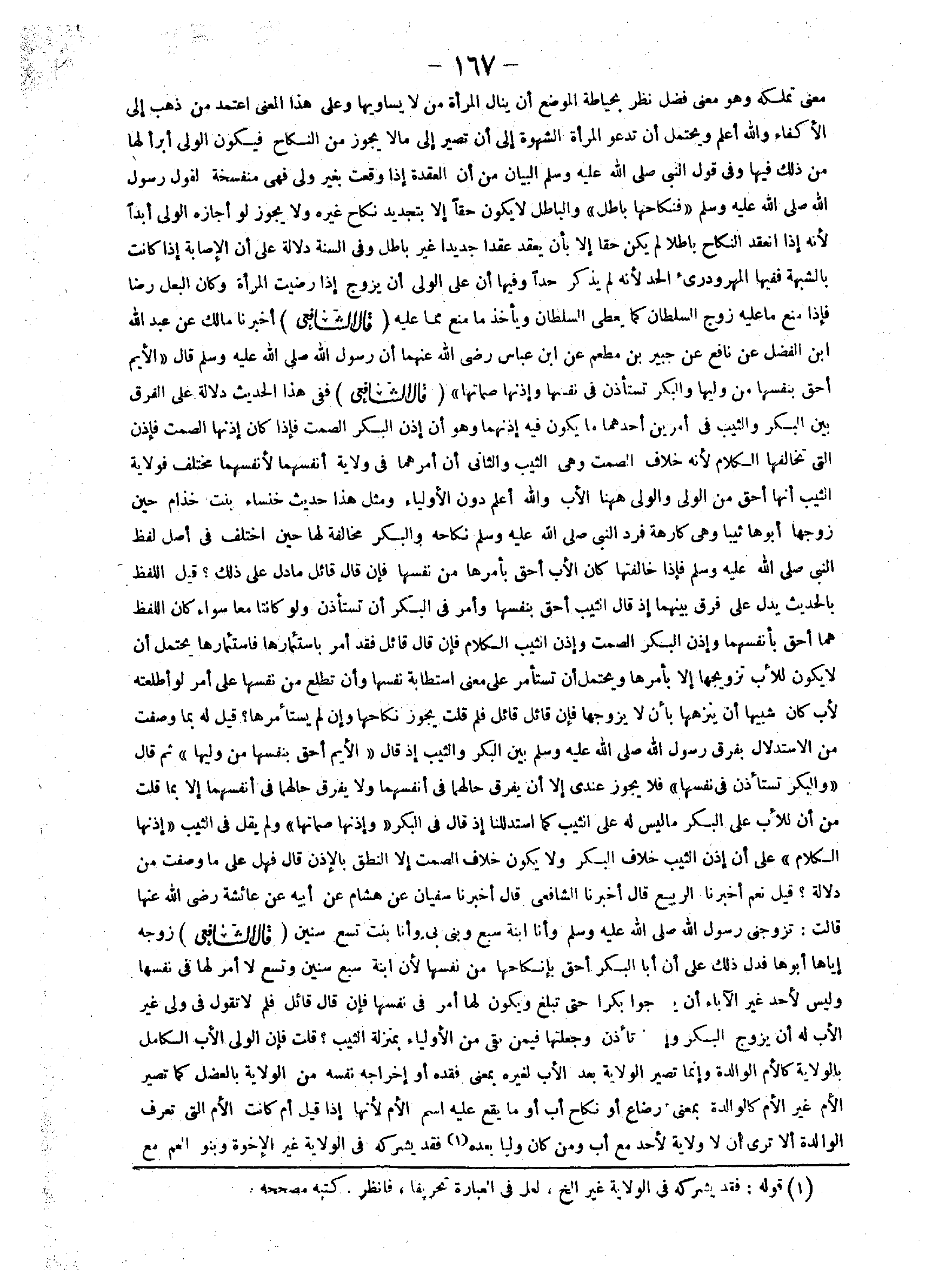
أخبرنا الربيع قال أخبرنا الشافعي قال أخبرنا سفيان عن هشام عن أبيه عن «عائشة ﵂ قالت: تزوجني رسول الله ﷺ وأنا ابنة سبع وبنى بي وأنا بنت تسع سنين». (قال الشافعي): زوجه إياها أبوها فدل ذلك على أن أبا البكر أحق بإنكاحها من نفسها لأن ابنة سبع سنين وتسع لا أمر لها في نفسها وليس لأحد غير الآباء أن يزوجوا بكرا حتى تبلغ ويكون لها أمر في نفسها
Full page
سنة رسول الله ﷺ دلالات منها أن للولي شركا في بضع المرأة ولا يتم النكاح إلا به ما لم يعضلها ثم لا نجد لشركه في بضعها معنى تملكه وهو معنى فضل نظر بحياطة الموضع أن ينال المرأة من لا يساويها وعلى هذا المعنى اعتمد من ذهب إلى الأكفاء والله أعلم ويحتمل أن تدعو المرأة الشهوة إلى أن تصير إلى ما لا يجوز من النكاح فيكون الولي أبرأ لها من ذلك فيها وفي قول النبي ﷺ البيان من أن العقدة إذا وقعت بغير ولي فهي منفسخة لقول رسول الله ﷺ فنكاحها باطل والباطل لا يكون حقا إلا بتجديد نكاح غيره ولا يجوز لو أجازه الولي أبدا لأنه إذا انعقد النكاح باطلا لم يكن حقا إلا بأن يعقد عقدا جديدا غير باطل وفي السنة دلالة على أن الإصابة إذا كانت بالشبهة ففيها المهر ودرئ الحد لأنه لم يذكر حدا وفيها أن على الولي أن يزوج إذا رضيت المرأة وكان البعل رضا فإذا منع ما عليه زوج السلطان كما يعطي السلطان ويأخذ ما منع مما عليه (قال الشافعي) أخبرنا مالك عن عبد الله بن الفضل عن نافع عن جبير بن مطعم عن ابن عباس ﵄ أن رسول الله ﷺ قال «الأيم أحق بنفسها من وليها والبكر تستأذن في نفسها وإذنها صماتها». قال الشافعي ففي هذا الحديث دلالة على الفرق بين البكر والثيب في أمرين أحدهما ما يكون فيه إذنهما وهو أن إذن البكر الصمت فإذا كان إذنها الصمت فإذن التي تخالفها الكلام لأنه خلاف الصمت وهي الثيب والثاني أن أمرهما في ولاية أنفسهما لأنفسهما مختلف فولاية الثيب أنها أحق من الولي والولي ههنا الأب والله أعلم دون الأولياء ومثل هذا حديث «خنساء بنت خذام حين زوجها أبوها ثيبا وهي كارهة فرد النبي ﷺ نكاحه» والبكر مخالفة لها حين اختلف في أصل لفظ النبي ﷺ فإذا خالفتها كان الأب أحق بأمرها من نفسها فإن قال قائل ما دل على ذلك قيل اللفظ بالحديث يدل على فرق بينهما إذ قال الثيب أحق بنفسها وأمر في البكر أن تستأذن ولو كانتا معا سواء كان اللفظ هما أحق بأنفسهما وإذن البكر الصمت وإذن الثيب الكلام فإن قال قائل فقد أمر باستئمارها فاستئمارها يحتمل أن لا يكون للأب تزويجها إلا بأمرها ويحتمل أن تستأمر على معنى استطابة نفسها وأن تطلع من نفسها على أمر لو أطلعته لأب كان شبيها أن ينزهها بأن لا يزوجها فإن قال قائل فلم قلت يجوز نكاحها وإن لم يستأمرها قيل له بما وصفت من الاستدلال بفرق رسول الله ﷺ بين البكر والثيب إذ قال «الأيم أحق بنفسها من وليها» ثم قال «والبكر تستأذن في نفسها» فلا يجوز عندي إلا أن يفرق حالهما في أنفسهما ولا يفرق حالهما في أنفسهما إلا بما قلت من أن للأب على البكر ما ليس له على الثيب كما استدللنا إذ قال في البكر وإذنها صماتها ولم يقل في الثيب إذنها الكلام على أن إذن الثيب خلاف البكر ولا يكون خلاف الصمت إلا النطق بالإذن قال فهل على ما وصفت من دلالة قيل نعم أخبرنا الربيع قال أخبرنا الشافعي قال أخبرنا سفيان عن هشام عن أبيه عن «عائشة ﵂ قالت: تزوجني رسول الله ﷺ وأنا ابنة سبع وبنى بي وأنا بنت تسع سنين». (قال الشافعي): زوجه إياها أبوها فدل ذلك على أن أبا البكر أحق بإنكاحها من نفسها لأن ابنة سبع سنين وتسع لا أمر لها في نفسها وليس لأحد غير الآباء أن يزوجوا بكرا حتى تبلغ ويكون لها أمر في نفسها فإن قال قائل فلم لا تقول في ولي غير الأب له أن يزوج البكر وإن لم تأذن وجعلتها فيمن بقي من الأولياء بمنزلة الثيب؟ قلت فإن الولي الأب الكامل بالولاية كالأم الوالدة وإنما تصير الولاية بعد الأب لغيره بمعنى فقده أو إخراجه نفسه من الولاية بالعضل كما تصير الأم غير الأم كالوالدة بمعنى رضاع أو نكاح أب أو ما يقع عليه اسم الأم لأنها إذا قيل أم كانت الأم التي تعرف الوالدة ألا ترى أن لا ولاية
Translation
Al-Rabi' reported to us: al-Shafi'i reported to us: Sufyan reported to us from Hisham, from his father, from Aisha, who said: 'The Messenger of God married me when I was a girl of seven, and consummated the marriage with me when I was a girl of nine.' Al-Shafi'i said: Her father gave her in marriage to him; this shows that the father of a virgin has more right to give her in marriage than she has herself, because a girl of seven and of nine has no say over herself. No one other than fathers may give a virgin in marriage until she reaches maturity and has a say over herself.
Word by word
Each Arabic word's literal counterpart; a hyphen marks an attached suffix/particle boundary. The fluent translation is above.
reported to us أَخْبَرَنَا al-Rabi' الرَّبِيعُ said قَالَ reported to us أَخْبَرَنَا al-Shafi'i الشَّافِعِيُّ said قَالَ reported to us أَخْبَرَنَا Sufyan سُفْيَانُ from عَنْ Hisham هِشَامٍ from عَنْ his father أَبِيهِ from عَنْ Aisha «عَائِشَةَ (may God be pleased with her) ﵂ said: قَالَتْ: married me تَزَوَّجَنِي the Messenger of رَسُولُ God اللَّهِ (peace be upon him) ﷺ while I was وَأَنَا a girl of ابْنَةُ seven سَبْعٍ and-consummated the marriage وَبَنَى with me بِي while I was وَأَنَا a girl of بِنْتُ nine تِسْعِ years. سِنِينَ». said (قَالَ al-Shafi'i: الشَّافِعِيُّ): gave him in marriage زَوَّجَهُ* to her (the girl) إيَّاهَا her father أَبُوهَا and-this showed فَدَلَّ that ذَلِكَ [showed] that عَلَى that أَنَّ the father of أَبَا the virgin الْبِكْرِ has more right أَحَقُّ to give her in marriage بِإِنْكَاحِهَا than مِنْ herself نَفْسِهَا because لِأَنَّ a girl of ابْنَةَ seven سَبْعِ years سِنِينَ and-nine وَتِسْعٍ has no لَا say أَمْرَ over herself لَهَا in فِي herself نَفْسِهَا and-there is not وَلَيْسَ for anyone لِأَحَدٍ other than غَيْرِ fathers الْآبَاءِ that أَنْ they marry off يُزَوِّجُوا a virgin بِكْرًا until حَتَّى she reaches maturity تَبْلُغَ and-has وَيَكُونَ for herself لَهَا a say أَمْرٌ in فِي herself نَفْسِهَا
Interlinear view
أَخْبَرَنَاreported to usالرَّبِيعُal-Rabi'قَالَsaidأَخْبَرَنَاreported to usالشَّافِعِيُّal-Shafi'iقَالَsaidأَخْبَرَنَاreported to usسُفْيَانُSufyanعَنْfromهِشَامٍHishamعَنْfromأَبِيهِhis fatherعَنْfrom«عَائِشَةَAisha﵂(may God be pleased with her)قَالَتْ:said:تَزَوَّجَنِيmarried meرَسُولُthe Messenger ofاللَّهِGodﷺ(peace be upon him)وَأَنَاwhile I wasابْنَةُa girl ofسَبْعٍsevenوَبَنَىand-consummated the marriageبِيwith meوَأَنَاwhile I wasبِنْتُa girl ofتِسْعِnineسِنِينَ».years.(قَالَsaidالشَّافِعِيُّ):al-Shafi'i:زَوَّجَهُgave him in marriageإيَّاهَاto her (the girl)أَبُوهَاher fatherفَدَلَّand-this showedذَلِكَthatعَلَى[showed] thatأَنَّthatأَبَاthe father ofالْبِكْرِthe virginأَحَقُّhas more rightبِإِنْكَاحِهَاto give her in marriageمِنْthanنَفْسِهَاherselfلِأَنَّbecauseابْنَةَa girl ofسَبْعِsevenسِنِينَyearsوَتِسْعٍand-nineلَاhas noأَمْرَsayلَهَاover herselfفِيinنَفْسِهَاherselfوَلَيْسَand-there is notلِأَحَدٍfor anyoneغَيْرِother thanالْآبَاءِfathersأَنْthatيُزَوِّجُواthey marry offبِكْرًاa virginحَتَّىuntilتَبْلُغَshe reaches maturityوَيَكُونَand-hasلَهَاfor herselfأَمْرٌa sayفِيinنَفْسِهَاherself
زَوَّجَهُ: زوّج takes two objects: 'زَوَّجَهُ إِيَّاهَا' = 'gave him [the Prophet] to her [the girl] in marriage'.
Source
الأم للشافعي - ط الفكر · Edition: دار الفكر - بيروت الثانية ١٤٠٣ هـ - ١٩٨٣ م (وأعادوا تصويرها ١٤١٠ هـ -١٩٩٠ م) (ترقيم موافق للمطبوع)
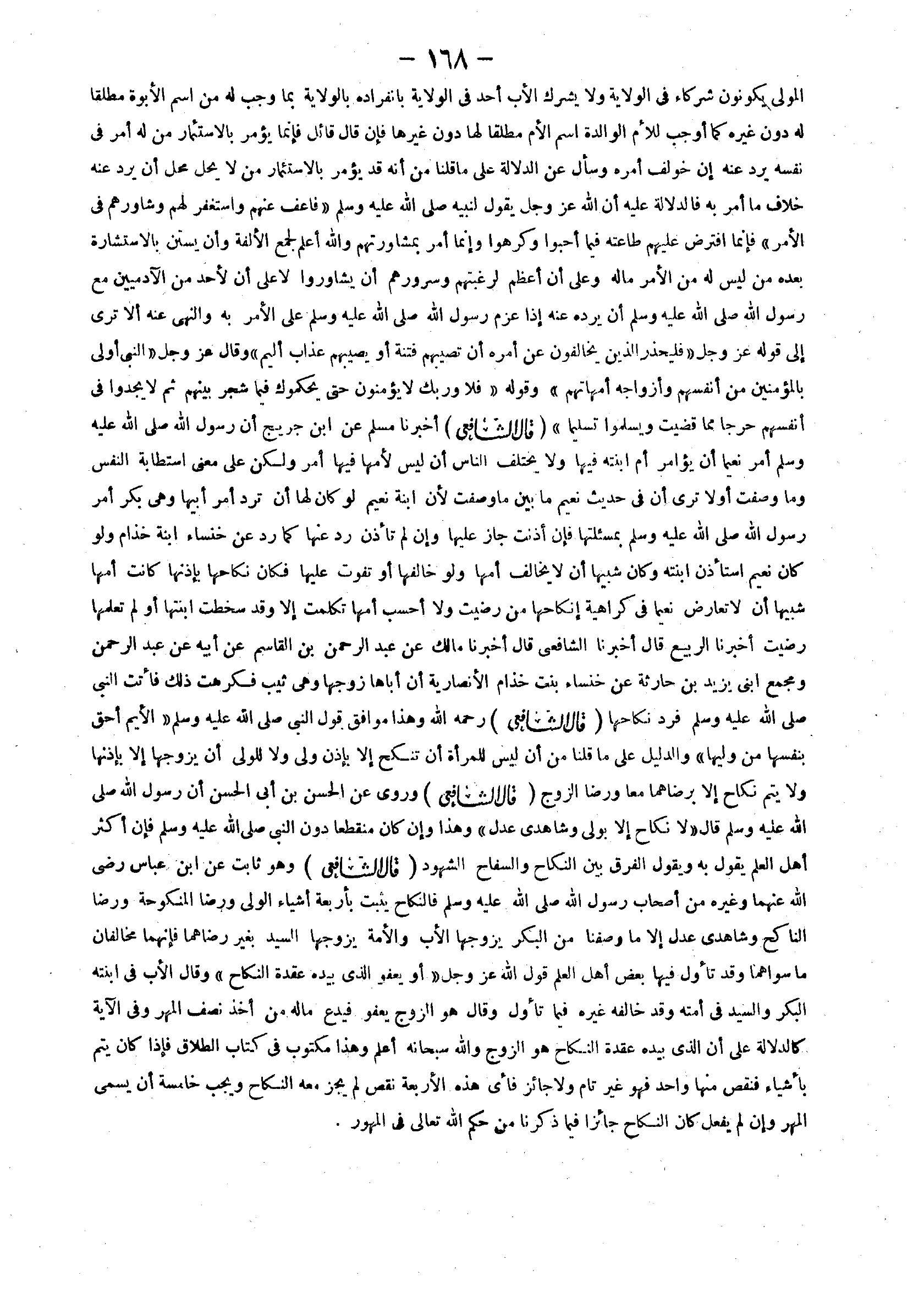
Scan of the printed edition: Dâru'l-Ma'rife, Beyrut (Muhammed Zührî en-Neccâr tashihi) · p. 167 · 05_36462.pdf (juz 5)
Scan page 167, continuing on 168 (Shamela: 179). The quote matches word for word; the only differences are the full stop, colon and quotation marks added by Shamela. The print shows ink drop-out in 'يزوجوا' and 'وإن لم', readable from context. Two independent checks passed on 2026-09-03.
Yellow boxes mark the lines of the quote; the scan image itself is unmodified.
Context
The passage occurs in the discussion of the difference between the virgin and the previously married woman. Starting from the report 'the previously married woman has more right over herself than her guardian, while the virgin is asked for her permission', al-Shafi'i argues that the virgin's permission is not a condition and that her father has 'more right' over her than she has; to the question 'is there proof of this?' he answers with the report that Aisha was married at seven and the marriage consummated at nine. The inference is explicit: 'a girl of seven and of nine has no say over herself', so the father decides on her behalf. The same proof is used again in al-Umm vol. 7 p. 163 for the proposition 'fathers may give minors in marriage'. The historical value of the report is not this entry's subject; the entry records the ruling drawn from it.
End of the previous page
زوجكها أبدا فنزلت ﴿فلا تعضلوهن﴾ وفي هذه الآية الدلالة على أن النكاح يتم برضا الولي والمنكحة والناكح وعلى أن على الولي أن لا يعضل فإذا كان عليه أن لا يعضل فعلى السلطان التزويج إذا عضل لأن من منع حقا فأمر السلطان جائز عليه أن يأخذه منه وإعطاؤه عليه والسنة تدل على ما دل عليه القرآن وما وصفنا من الأولياء والسلطان. أخبرنا الربيع قال أخبرنا الشافعي قال حدثنا سعيد بن سالم عن ابن جريج عن سليمان بن موسى عن ابن شهاب عن عروة عن عائشة ﵂ عن النبي ﷺ أنه قال «أيما امرأة نكحت بغير إذن وليها فنكاحها باطل ثلاثا فإن أصابها فلها المهر بما استحل من فرجها فإن اشتجروا فالسلطان ولي من لا ولي له». (قال الشافعي): ﵀ ففي
Start of the next page
لأحد مع أب ومن كان وليا بعده فقد يشركه في الولاية غير الإخوة، وبنو العم مع المولى يكونون شركاء في الولاية ولا يشرك الأب أحدا في الولاية بانفراده بالولاية بما وجب له من اسم الأبوة مطلقا له دون غيره كما أوجب للأم الوالدة اسم الأم مطلقا لها دون غيرها فإن قال قائل فإنما يؤمر بالاستئمار من له أمر في نفسه يرد عنه إن خولف أمره وسأل عن الدلالة على ما قلنا من أنه قد يؤمر بالاستئمار من لا يحل محل أن يرد عنه خلاف ما أمر به فالدلالة عليه أن الله ﷿ يقول لنبيه ﷺ ﴿فاعف عنهم واستغفر لهم وشاورهم في الأمر﴾ فإنما افترض عليهم طاعته فما أحبوا وكرهوا وإنما أمر بمشاورتهم والله أعلم لجمع الألفة وأن يستن بالاستشارة بع
Positions of the schools
Hanafi
Permitted. Al-Sarakhsi takes the report that Aisha was married at six and the marriage consummated at nine as 'proof that the marriage of a minor boy or girl by the fathers is permitted', and records the dissent of Ibn Shubruma and Abu Bakr al-Asamm.
Permitted: 'the father's giving in marriage is binding on her' (reported from Malik, vol. 2 p. 100). An executor, by contrast, may not marry off a minor girl before puberty (vol. 2 p. 114).
The father may marry off his virgin daughter without her consent; the proof is the Aisha report. No one other than the father (and grandfather) may marry off minors; such contracts are annulled.
Permitted and undisputed: 'as for the minor virgin, there is no disagreement about her.' Ibn Qudama relies on Ibn al-Mundhir's report of consensus ('everyone whose knowledge we preserve agreed it is permitted') and on Quran 65:4 ('those who have not menstruated').
The tradition's defence runs as follows. (1) Contract and consummation are distinct: the father only contracts; consummation is deferred until the girl 'can bear it'. (2) The one contracting is the father, whose compassion is presumed; the authority is limited by suitability (kafa'a) and a proper dower; for guardians other than the father most schools require the girl's consent. (3) The Prophet's marriage to Aisha is a practice transmitted in Bukhari and Muslim, and other Companions also married off their daughters as minors. (4) Quran 65:4, 'those who have not menstruated', regulates the waiting period of girls who have not yet menstruated and therefore presupposes their marriage. (5) Ibn al-Mundhir and Ibn Abd al-Barr report consensus; the four schools agree on this point. (6) This was the social norm of the age; fiqh did not forbid it, but hedged it with conditions.
«Until they reach [the age of] marriage; then if you perceive in them sound judgement»: the Quran names 'reaching marriage' as a developmental threshold and asks that sound judgement be tested at it. The verse concerns orphans' property; that marriage is a stage one 'reaches' is the text's explicit wording.
That marriage belongs to those who have 'reached' it, and that a child of seven has not reached this threshold, is an inference the text compels. The text knows no distinction between contract and consummation; that distinction is fiqh's. The strongest counter-reading is 65:4, treated below.
«Do not prevent them from marrying their husbands when they have agreed among themselves in a fair manner»: for divorced women, marriage is formed by the parties' mutual consent and guardians may not obstruct it. Extending this to a first marriage: text-compatible.
«And those who have not menstruated»: the tradition's proof (al-Mughni vol. 9 p. 398). The text says 'those of your women (min nisa'ikum) who have not menstruated'; that these are pre-pubescent girls is a reading the text permits, not one it states. The reading 'adult women who do not menstruate' is compatible with the text to the same degree; the text gives no age. The threshold of 4:6 weighs against the first reading. The honest result: both readings are text-compatible; neither is text-explicit.
Commentary
This section is the site's editorial view. The record above stands independently of it and can be verified on its own.
What is at issue is not the historical accuracy of the report; that is a separate question. The question here is this: when the Quran sets 'reaching marriage' as a threshold, can a single report make that threshold passable by a father's authority? Al-Shafi'i's sentence ('a girl of seven has no say over herself') is an observation, and a true one; the ruling he draws from it ('so the father decides in her place') is the product of authority, not of the text. The same observation would also yield 'so she is not yet of marriageable age'; the text stands closer to that second conclusion.
What is at issue is not the historical accuracy of the report; that is a separate question. The question here is this: when the Quran sets 'reaching marriage' as a threshold, can a single report make that threshold passable by a father's authority? Al-Shafi'i's sentence ('a girl of seven has no say over herself') is an observation, and a true one; the ruling he draws from it ('so the father decides in her place') is the product of authority, not of the text. The same observation would also yield 'so she is not yet of marriageable age'; the text stands closer to that second conclusion.